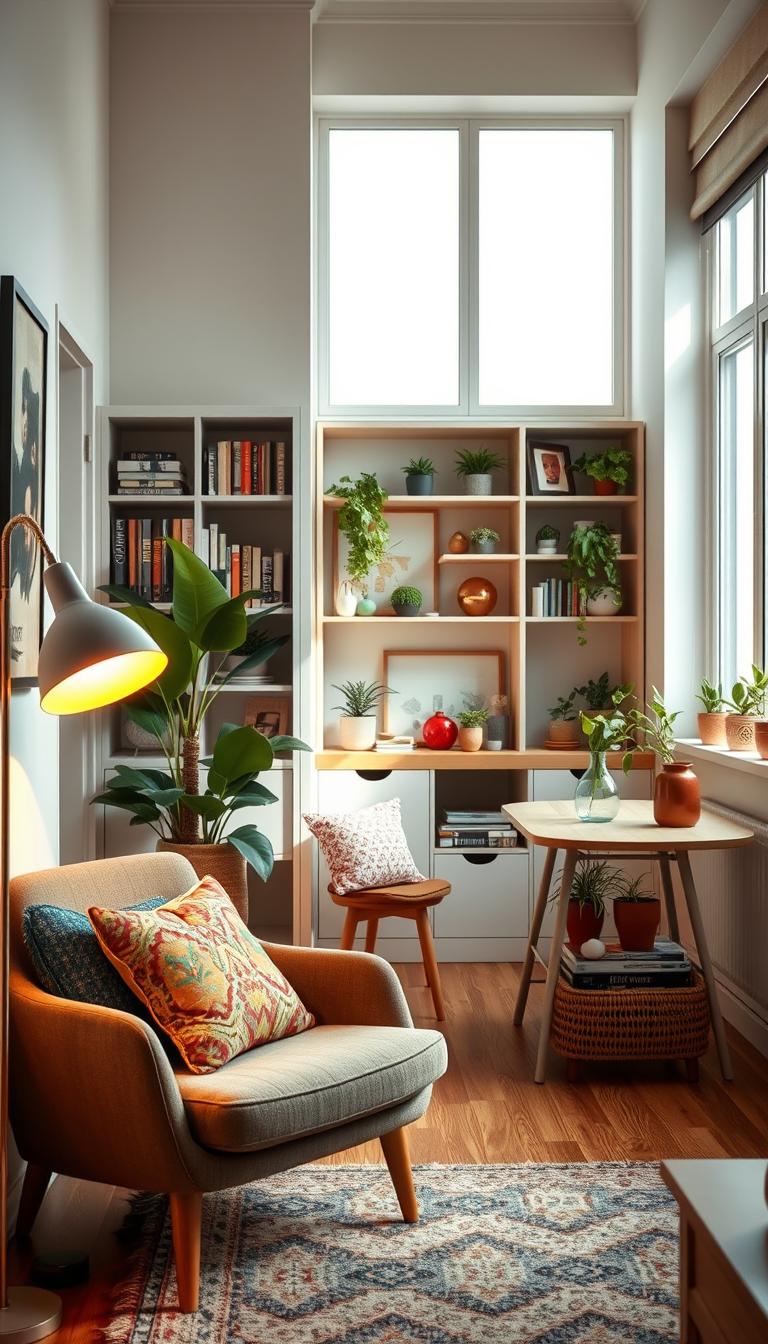
Transforming your shelves can significantly enhance your living space. Learning how to style shelves like a pro starts with a clean and decluttered base, allowing chosen decor to truly shine. Effective shelf styling integrates seamlessly with your room’s architecture, whether opting for warm wood, sleek metal for an industrial vibe, or glass to transparently display items. Balancing functionality and aesthetic appeal is key; be sure to select shelves with dimensions that suit your needs and provide ample room for your decor. Embrace these shelf styling tips from expert shelf styling enthusiasts to create an inspirational display that reflects your personal taste.
Key Takeaways
- Begin with a clean slate to achieve a polished look.
- Choose materials that complement your room’s design.
- Balance functionality with aesthetic styling.
- Please be aware of the shelf dimensions for the best decor placement.
- Incorporate expert shelf styling techniques for a curated feel.
Mix books with decorative objects
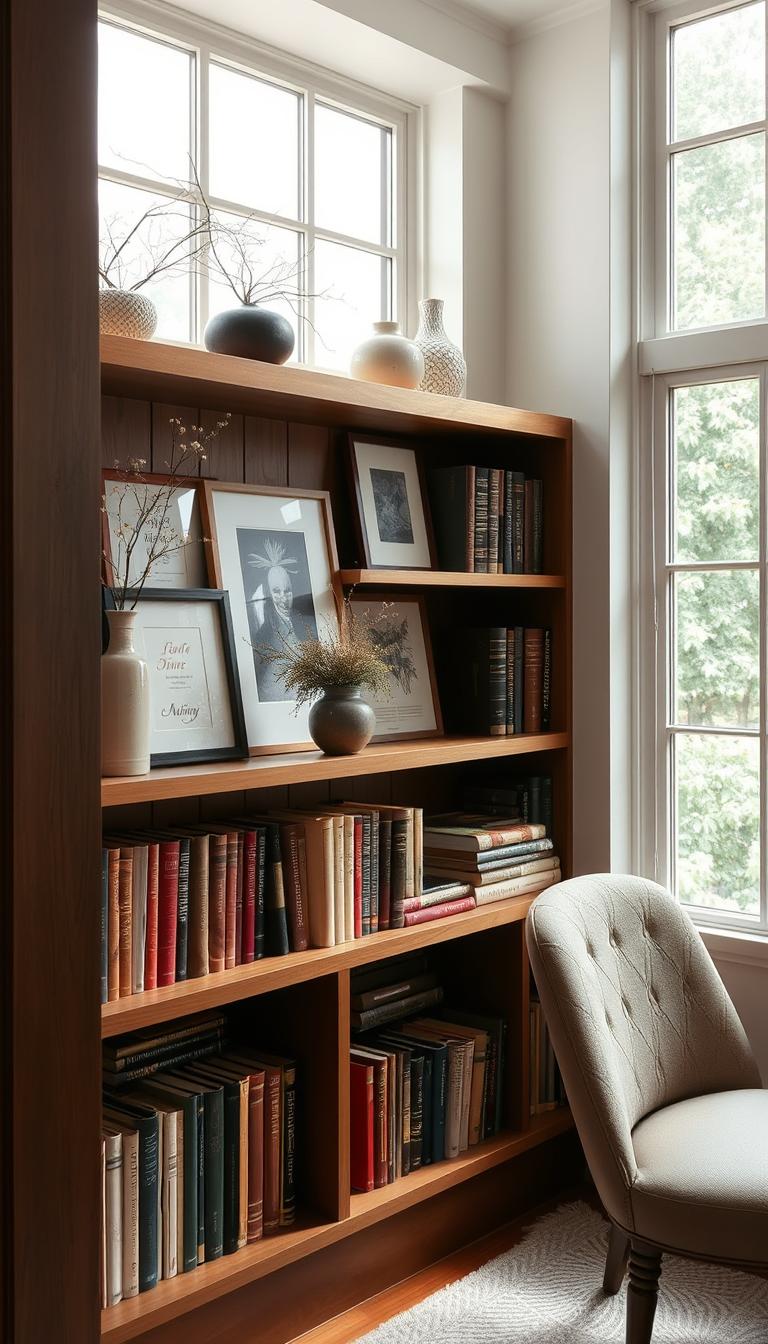
Mixing books with decorative objects offers an engaging way to elevate your shelf decor ideas. This approach not only adds an eclectic touch but also allows for personal expression. You can start by choosing a variety of books that complement your theme, whether they are vintage editions or modern bestsellers.
Arrange these books with decorative objects to create visual interest. Consider some of the following creative pairings:
- Stack books horizontally to serve as a base for smaller decorative items.
- Could you integrate vases or sculptures with your books to introduce an artistic element?
- Group them by size or color to maintain harmony while showcasing your unique style.
- Mix textures by pairing hardcovers with soft, tactile elements, such as a fabric runner.
This blend of functional and decorative pieces makes styling bookshelves a rewarding endeavor. Embracing diverse arrangements transforms ordinary shelves into eye-catching displays.
Use the rule of thirds for balanced groupings
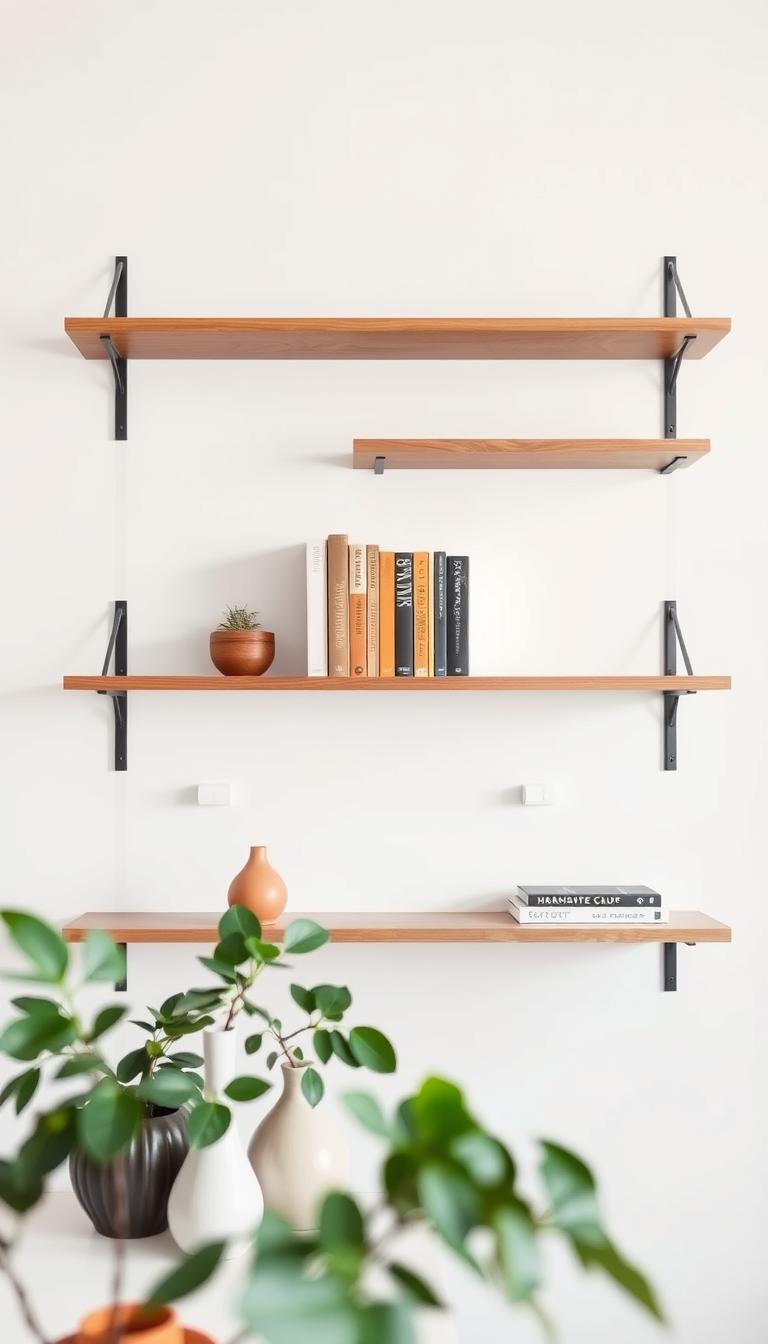
Creating visually appealing shelves relies heavily on following the rule of thirds. This principle divides the shelf into three equal sections, allowing for thoughtful arrangement of items. By integrating this technique, a cohesive and attractive setup emerges that showcases your favorite decor.
When utilizing the rule of thirds, consider the following tips for expert shelf styling:
- Group items based on size and shape to enhance balance and harmony.
- Utilize negative space to prevent overcrowding and highlight key elements.
- Incorporate elements that draw the eye, such as art pieces or statement objects.
This method not only provides shelf design inspiration but also elegantly showcases a curated collection. Embracing the rule of thirds allows anyone to achieve a professional look without extensive experience, making it a valuable tactic in shelf styling.
Add items of varying heights.
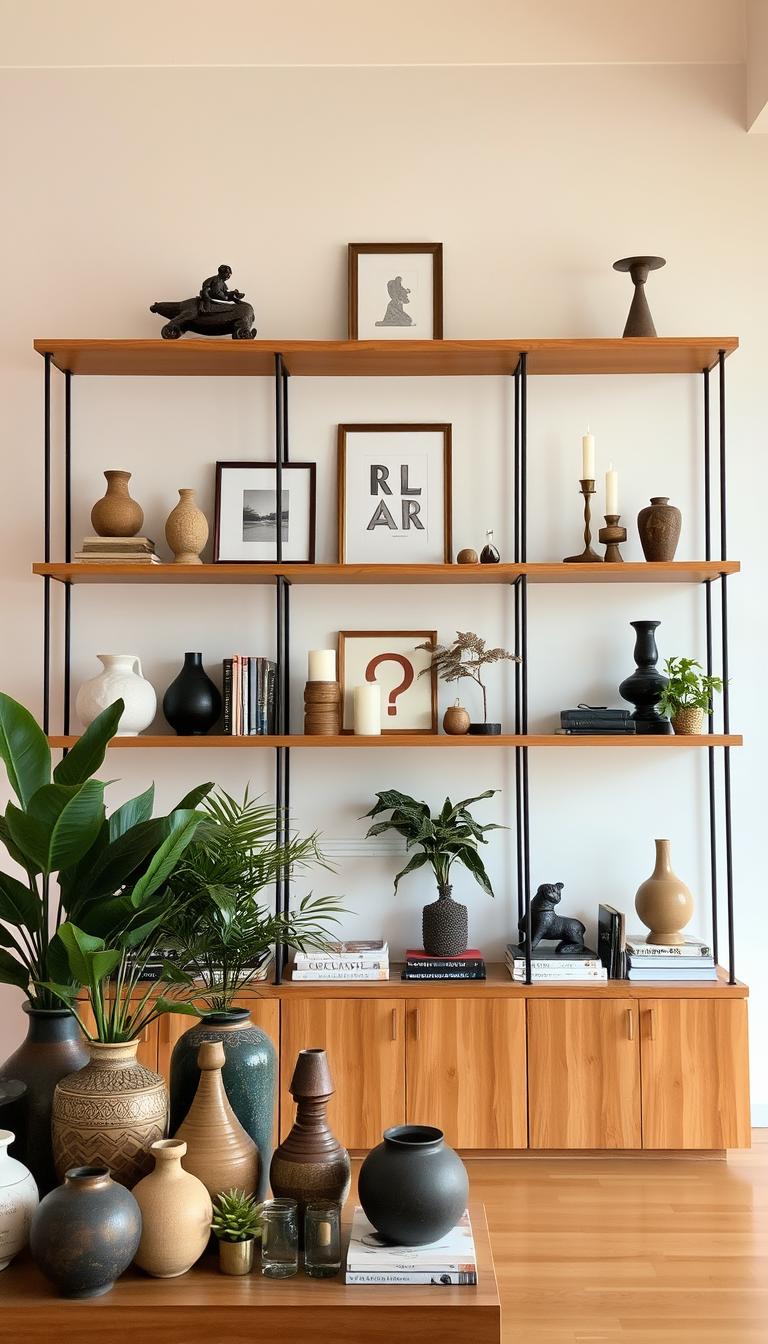
Incorporating items of varying heights plays a crucial role in achieving visually pleasing shelf layout techniques. When shelves boast a mix of tall vases, sculptures, and short books or decorative pieces, they become more dynamic and inviting. This variety draws the eye and invites exploration, showcasing the essence of expert shelf styling.
Consider these tips to effectively utilize height:
- Could you place tall objects at the back or center of the shelf, allowing them to serve as focal points?
- Arrange shorter items around taller ones to create balance and maintain interest.
- Mix shapes and sizes for added visual flair, making the arrangement less predictable.
Incorporate natural elements like plants
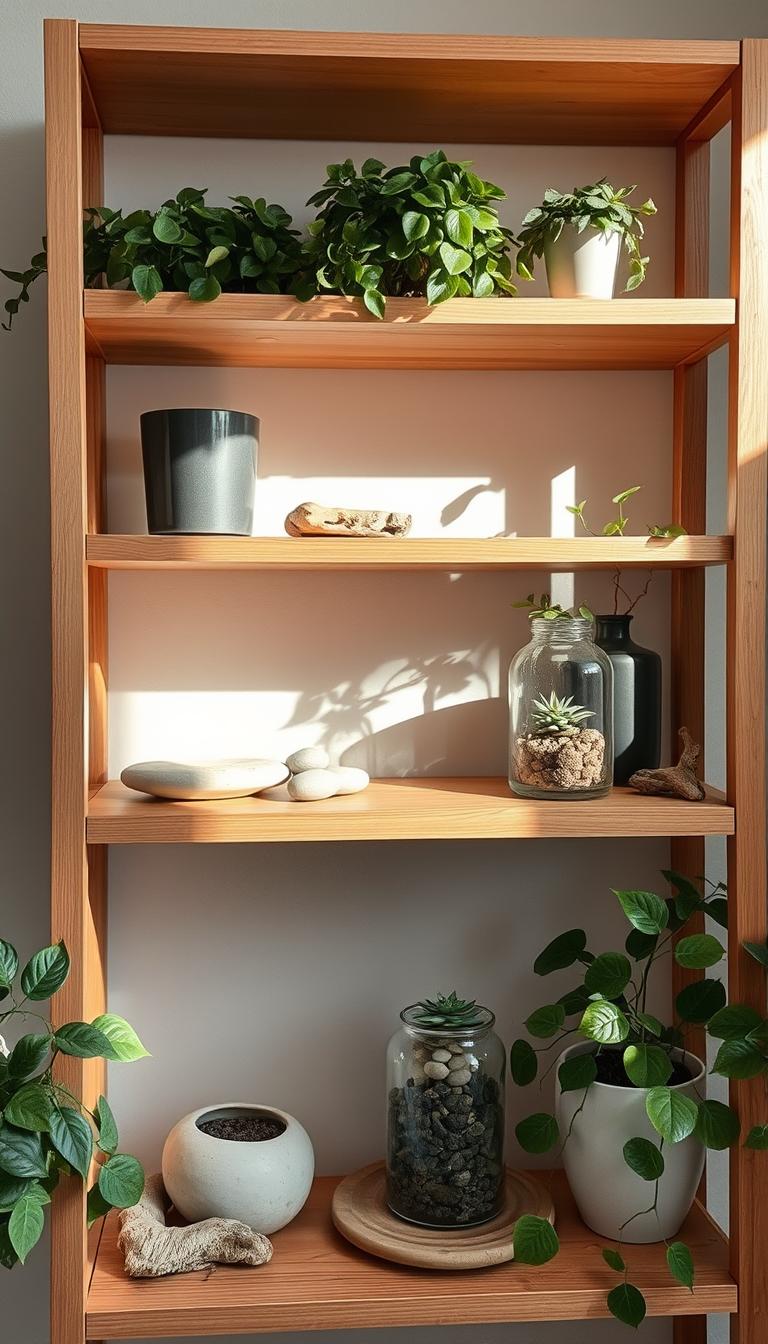
Bringing nature into your home can significantly enhance your shelf decor ideas. Incorporating natural elements like plants adds a refreshing touch and creates a lively atmosphere. Whether you opt for real plants or high-quality artificial options, these green accents can bring a sense of tranquility to your space.
Consider these tips for effectively incorporating natural elements:
- Opt for small potted plants, such as succulents or ferns, that fit well on shelves.
- Use hanging planters to draw the eye upward, creating additional visual interest.
- Combine plants with other shelf decor items to create striking contrasts and textures.
When selecting plants, consider their care requirements and how they complement your existing decor. Integrating natural elements can seamlessly blend aesthetics with a hint of the outdoors.
Layer items front to back
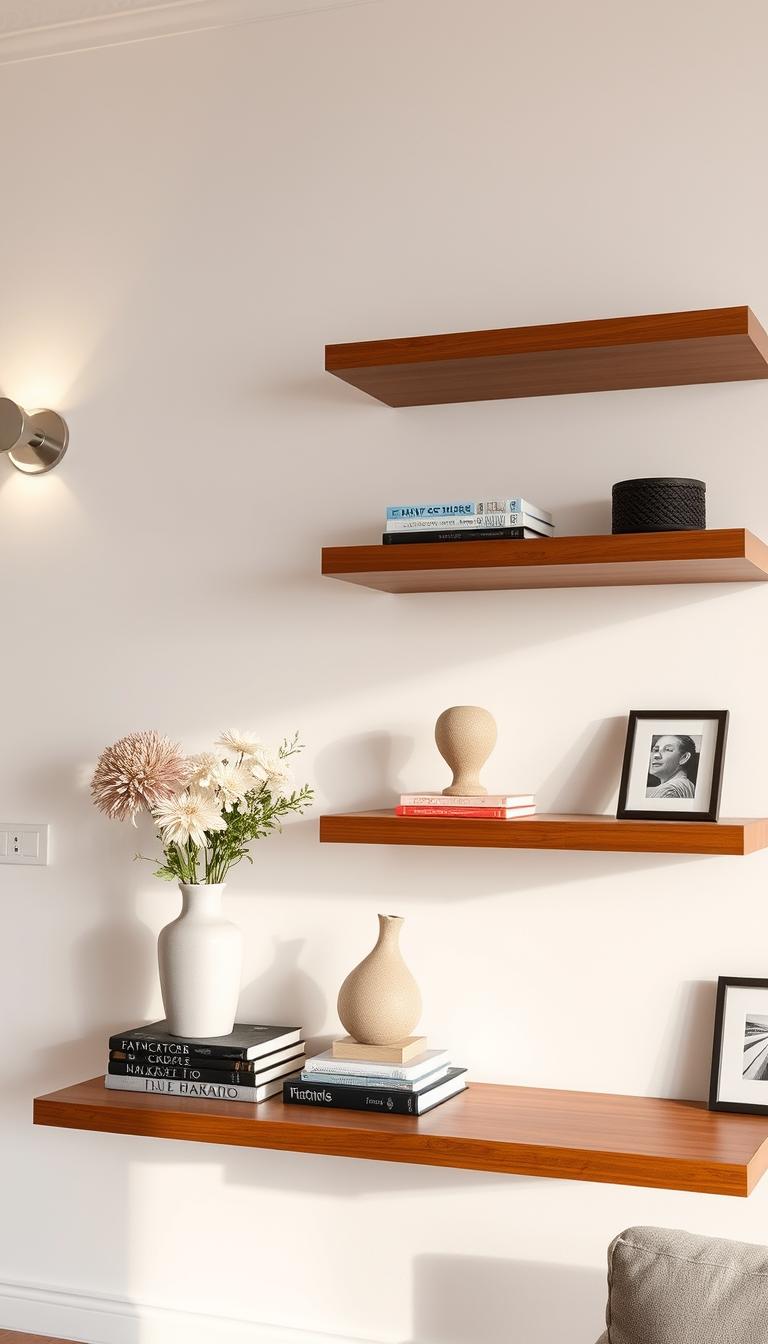
Incorporating depth into your shelf design adds a fascinating element to the decor. By layering items from front to back, you create visual interest that invites viewers to explore your arrangement. Smaller items placed in the foreground can highlight more substantial pieces at the back, ensuring that no single item overpowers the others.
These shelf styling tips emphasize the balance between contrasting sizes, resulting in a more dynamic display. When arranging your shelves, consider the following:
- Start with a large statement piece at the back.
- Add medium-sized decorative objects in the middle.
- Finish with small trinkets or plants in the front.
Using this layering technique enhances the overall aesthetic while reflecting your personality. It serves as a fantastic source of shelf design inspiration, encouraging creativity in your styling endeavors.
Include baskets or boxes for hidden storage
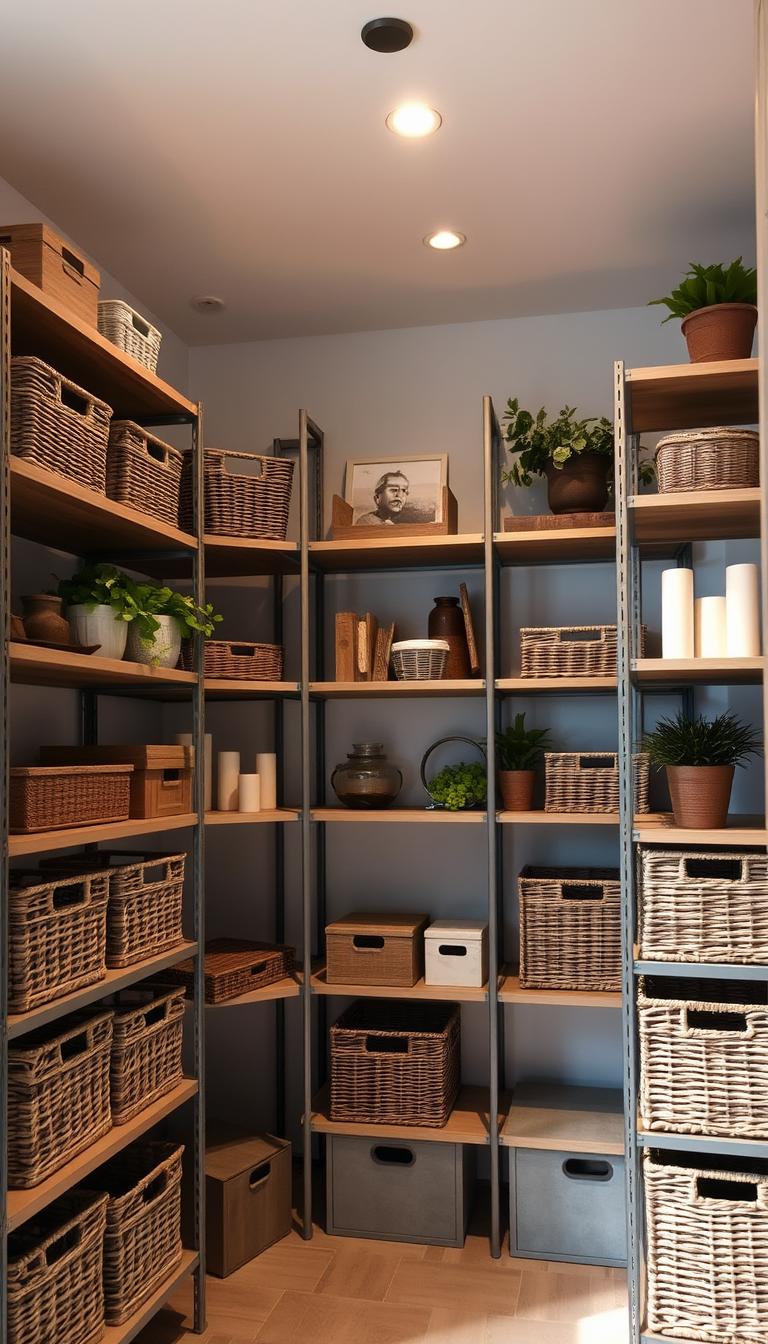
In the realm of expert shelf styling, incorporating baskets or boxes elevates your design to the next level. These items serve as practical storage solutions, helping to keep your shelves organized while adding a touch of flair. When you think about how to style shelves like a pro, consider the variety of textures and colors baskets can bring to the arrangement.
Baskets work wonderfully for hiding away smaller items that could disrupt your carefully curated look. By organizing these pieces, you create a neat and appealing display that invites the eye to explore further. For an added touch, use decorative boxes that not only conceal clutter but also enhance the overall aesthetic.
Stick to a cohesive color palette
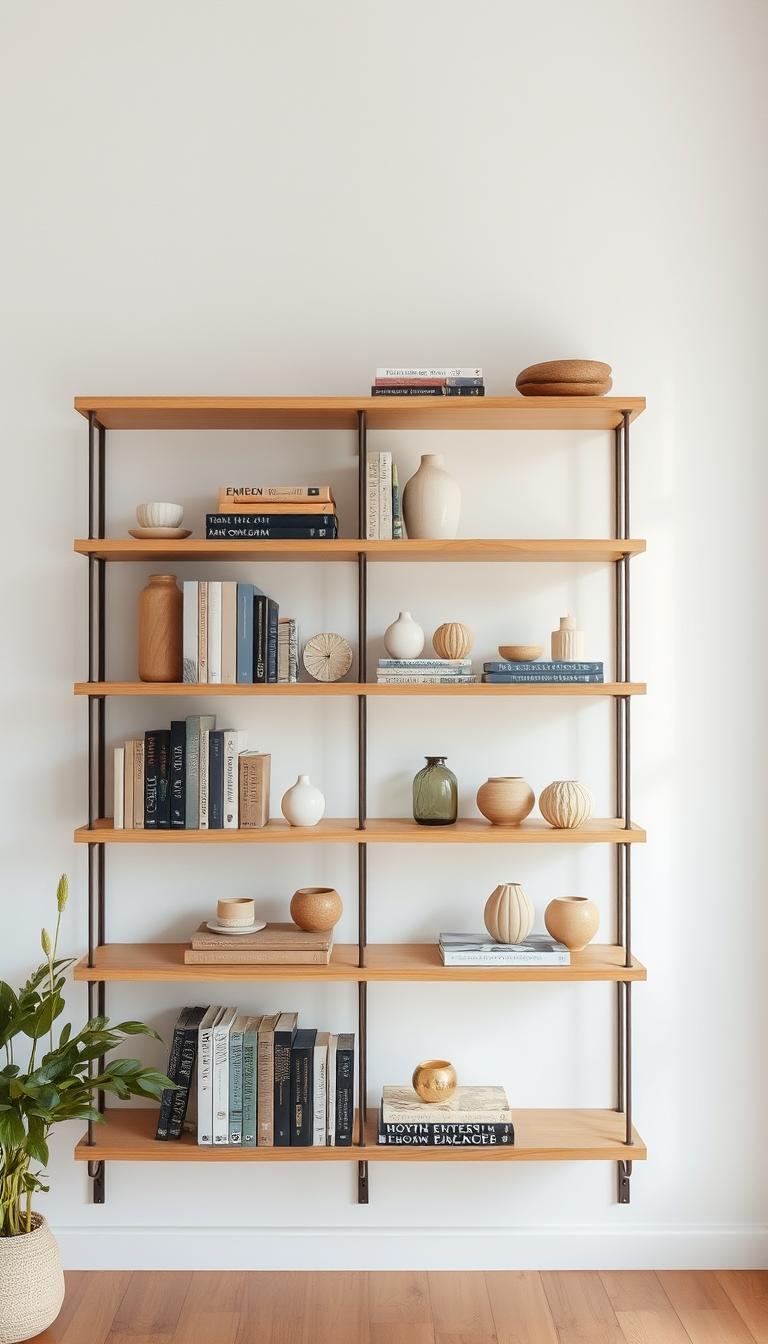
Creating a stunning shelf design inspiration involves choosing a cohesive color palette. Begin by selecting a few complementary colors that harmonize with your room’s decor and overall aesthetic. By carefully selecting these hues, you can curate a collection that feels coordinated and visually appealing.
Incorporating the chosen colors into your shelves can be achieved through various items, such as books, decorative objects, and even artwork. For instance, could you consider the challenge of stacking colors within the same color family to add depth and intrigue? This variation can enhance the overall visual story of your shelf display.
Consistent color schemes can transform mundane arrangements into dynamic showcases. When the right shades are used, the shelf becomes not just a functional space, but also an artistic expression that complements your home. Please pay attention to the balance within your color choices to make sure each piece contributes to a harmonious overall look.
Leave intentional empty space
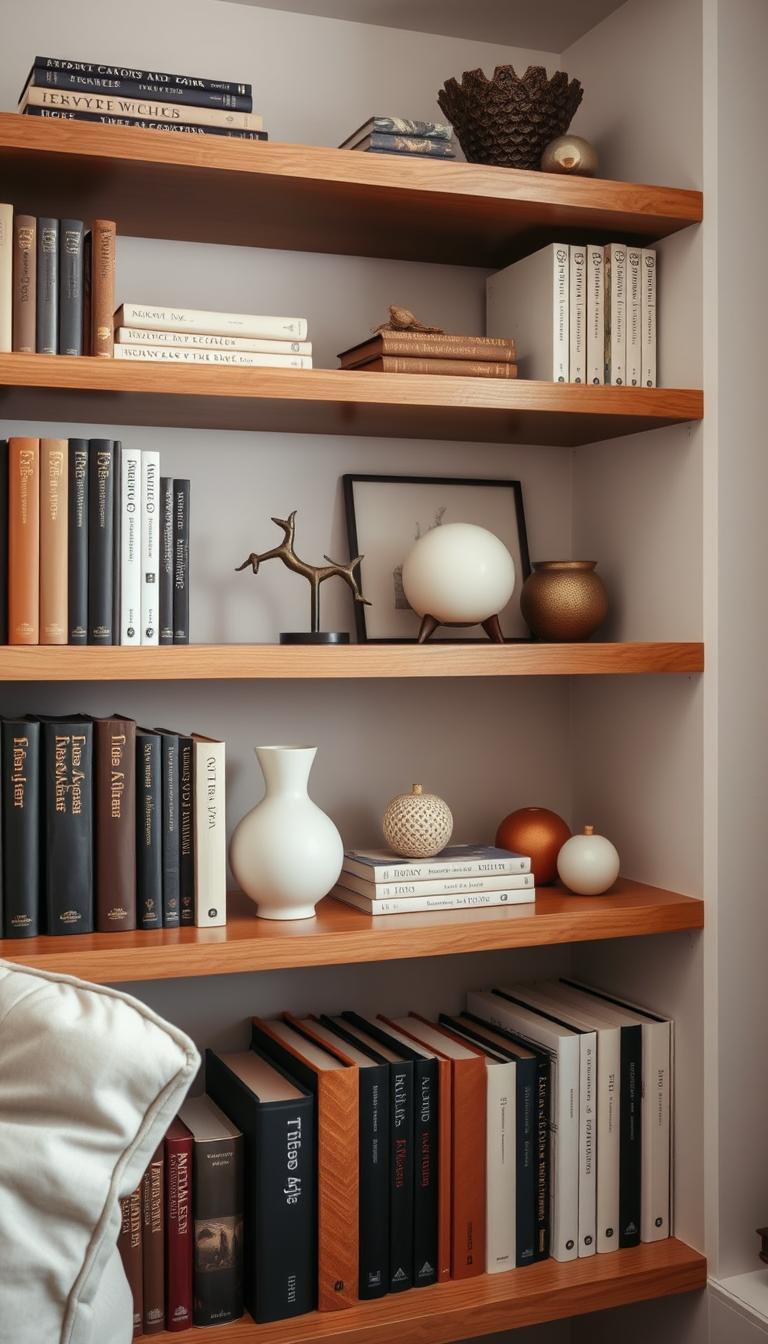
In expert shelf styling, the importance of empty space cannot be underestimated. This intentional gap provides breathing room, enhancing visual balance. Allowing items to breathe will elevate your arrangement, making each piece stand out on its own.
When curating your shelves, consider the following elements:
- Highlight key pieces: By leaving gaps around significant items, your display will effectively draw the eye to them.
- Please maintain clarity: clutter can overwhelm, so strategic empty spaces help ensure that each element is appreciated.
- Enhance aesthetics: A well-thought-out empty space contributes to a clean, polished look, allowing for seamless transitions between items.
Rotate décor seasonally
One of the most impactful shelf styling tips is to regularly rotate your décor with the changing seasons. This keeps your space feeling fresh and inviting, and it offers a fun opportunity to infuse your shelves with the essence of each season. Think about introducing vibrant elements like colorful flowers for spring, leafy greens for summer, warm hues of autumn leaves, or sparkling decorations for winter festivities.
Utilizing seasonal decor can create a dynamic visual narrative within your living space. For instance, when fall arrives, you can incorporate cozy items like miniature pumpkins, textured throws, or even pinecones to reflect that autumnal charm. In summer, bright and cheerful accents can liven up your shelves, making them a true reflection of the season.
This practice is not just about aesthetics; rotating your décor can also encourage a sense of mindfulness and connection to the seasons. By changing your shelf displays, you allow new ideas and inspiration to flow into your home, while enhancing your overall ambiance. So why not embrace these seasonal transitions as a part of your home’s styling journey?